
Hernia Surgery Melbourne and Regional Victoria
Understanding Hernias
Living with a hernia may be uncomfortable, frustrating, and sometimes worrying. What may begin as a small lump or mild discomfort in the groin or abdomen often becomes more noticeable over time, especially when lifting, coughing, or straining.
While some hernias cause only minor inconvenience, others have the potential to lead to chronic pain or even life-threatening complications if left untreated.
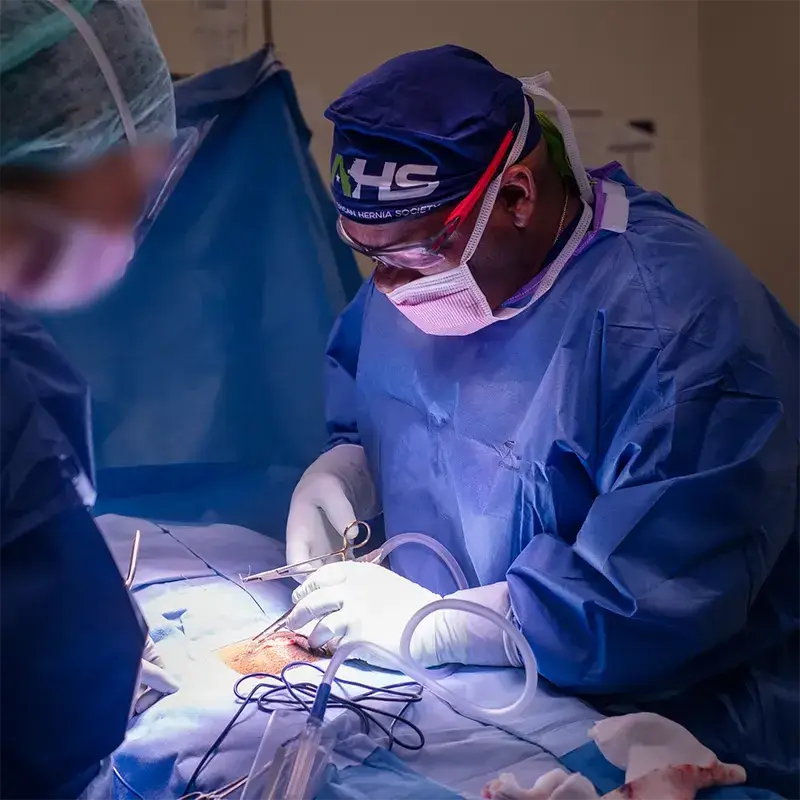
As a Specialist General Surgeon with interests and advanced knowledge in complex hernia repair, Dr Roshan Ariyaratnam is a natural choice for complex hernia cases, revision work, and referrals from other surgeons.
Causes of Hernias
Symptoms of Hernias
The symptoms of hernias may vary. Most hernias cause a lump that may be tender or lead to increased pain with activity or straining. Other signs include:
- A ‘dragging’ feeling
- Pressure
- Discomfort
- Swelling
- Pain where the lump is located
- Pain that occurs when lifting heavy objects
- A burning feeling in the affected area
This is known as a strangulated hernia and is considered a medical emergency, requiring urgent surgery.
Because hernias tend to enlarge over time and can cause serious complications, surgeons typically recommend hernia repair surgery.

Types of Hernia
There are three main types of abdominal wall hernia:

Umbilical Hernia
What it is: An umbilical hernia occurs when tissue near the navel (belly button, or umbilicus) protrudes through the abdominal wall muscles.
Common symptoms: Pain, pressure, and a visible bulge in or near the navel that becomes more prominent when coughing or straining.
Treatment options: Initially, an umbilical hernia may be small, but leaving it untreated carries the risk of strangulation, which requires immediate surgery. Regardless of its size, hernia surgery is the only way to repair an umbilical hernia.

Groin Hernia
What it is: A groin hernia occurs when tissue pushes through the lower abdominal wall, extending from the lower abdomen into the groin area and sometimes toward the upper thigh. While the most common type is an inguinal hernia, women are also more likely to develop a femoral hernia (which is less common overall).
Common symptoms: Pain, pressure, and a bulge in the groin area that becomes more visible when coughing or straining. However, not all groin hernias cause a lump, and in women, they may present only with pain or discomfort.
Treatment options: If your groin hernia is not uncomfortable, you may be able to watch and wait to see how it progresses. Typically, a groin hernia becomes symptomatic after one to two years. At this point, doctors typically recommend hernia surgery as it may assist with reducing symptoms like constipation and urinary difficulties.

Ventral Hernia
What it is: A ventral hernia is a weakness in the abdominal wall where tissue pushes through. Types include incisional hernia (at a previous incision site), epigastric hernia (above the navel), and the less common spigelian hernia (between muscle layers).
Common symptoms: Pain, pressure, and a visible bulge in the abdominal area that becomes more prominent when coughing or straining.
Treatment options: For ventral hernias that aren’t uncomfortable, watching and waiting is typically considered safe. However, if the hernia becomes larger or causes pain, hernia surgery is recommended.
Hernia Surgery With Dr Roshan Ariyaratnam
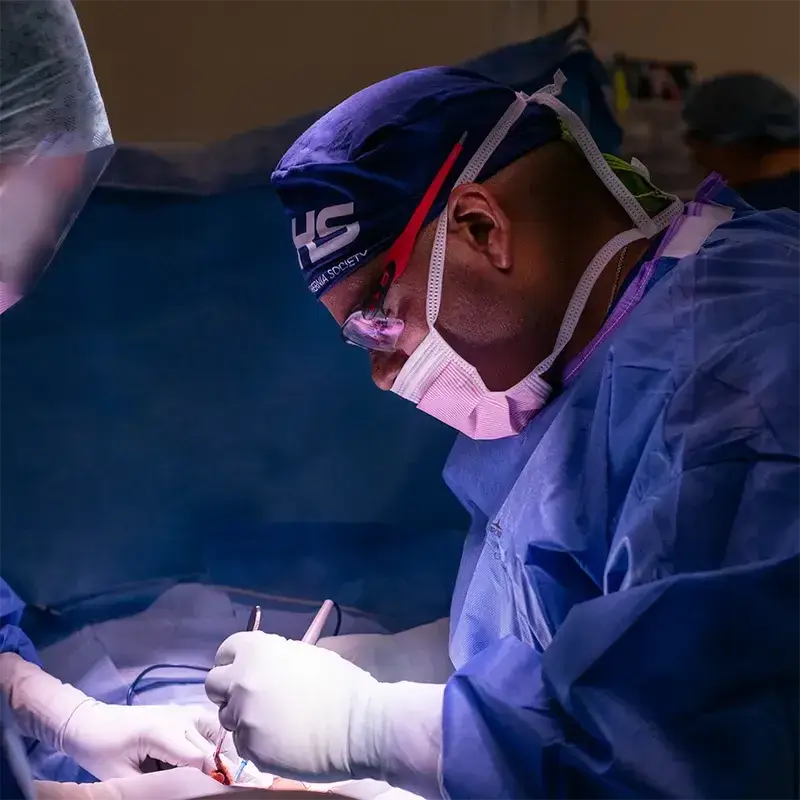
As a general surgeon with extensive experience in both open and laparoscopic hernia repair, Dr Roshan Ariyaratnam provides tailored care for patients across Melbourne and regional Victoria. He combines advanced laparoscopic techniques with a patient-centred philosophy to aim for the best outcomes.
After receiving your referral, his process includes:
- Initial consultation: Confirming diagnosis, identifying the hernia, and reviewing risks and benefits.
- Hernia repair surgery: Using keyhole or open techniques.
- Recovery and follow-up: Supporting patients with guidance on when to resume strenuous activity or strenuous exercise after surgery.
Dr Roshan Ariyaratnam is also recognised by other surgeons for his interest in complex hernia repair and abdominal wall reconstruction, making him a trusted choice for referrals across the Melbourne hernia community.
Mesh and Your Hernia Repair
Most hernia repairs today use absorbable mesh to strengthen the abdominal wall and reduce the likelihood of the hernia recurring. While small hernias with minimal symptoms may sometimes be managed with ‘watchful waiting’ or non-mesh tissue repair, mesh reinforcement is considered the gold standard for most inguinal and ventral hernias.
Mesh is tightly regulated in Australia by the TGA and supported by the ANZ Hernia Society. Though complications are rare, they may occur with both mesh and non-mesh repairs; however, mesh repairs generally have lower recurrence rates. Dr Roshan Ariyaratnam will discuss the advantages, disadvantages, and your individual circumstances so you can make an informed decision.
Robotic Hernia Surgery
Robotic hernia surgery is the next evolution in minimally invasive hernia repair, combining the precision of advanced robotic technology with the expertise of a specialist hernia surgeon. Using the da Vinci Xi surgical platform, Dr Roshan Ariyaratnam performs robotic procedures that allow greater accuracy, smaller incisions, and faster recovery compared with traditional open or standard laparoscopic repair.
This approach is particularly beneficial for complex ventral, incisional, inguinal, and recurrent hernias, where meticulous dissection and tension-free closure are critical for long-term durability. The robotic system provides enhanced 3D vision, tremor filtration, and wrist-like instrument movement, enabling refined control during component separation or mesh placement.
Key advantages of robotic hernia surgery include:
- Smaller scars and reduced postoperative pain
- Lower risk of wound complications and infection
- Quicker return to normal activity and work
- Improved precision in abdominal wall reconstruction
- Safe and reproducible outcomes for complex or recurrent hernias
Ready to address your hernia and potentially eliminate your discomfort?
Your Hernia Surgery Melbourne Questions Answered
Do all hernias need surgery?
What is the difference between open hernia repair and laparoscopic hernia repair?
What is complex hernia surgery?
How long is the recovery after hernia surgery?
Why Dr Roshan Ariyaratnam?
Specialist in Complex Hernia Repair
Dr Roshan Ariyaratnam has extensive experience in open and laparoscopic techniques, abdominal wall reconstruction, and complex hernia repair.
Rapid Access
Most patients are seen within one week of referral, with streamlined GP and specialist communication.
Convenient Access
Dr Roshan Ariyaratnam consults across multiple locations in Melbourne and Shepparton, allowing you to choose the location most convenient for you.
Our Clinic Locations
Book Your Hernia Consultation Today
If you’ve noticed a lump, pain, or symptoms that suggest a hernia, treatment options are available close to home. Dr Roshan Ariyaratnam is a specialist in complex hernia repair and aims to offer lasting relief from multiple locations in Melbourne and regional Victoria.
Don’t let discomfort rule your life; book your appointment today to discuss the most appropriate treatment for your hernia.