
Hernia Surgery Canterbury
Hernia repair, provided by a Canterbury general surgeon with a focus on complex cases.
Understanding Hernias
A hernia can cause both physical discomfort and emotional frustration. It often starts as a minor swelling or slight pain in the groin or stomach area and tends to become more pronounced with exertion, coughing, or lifting.
In some instances, a hernia may seem like a small issue, but without treatment, it can develop into a source of lasting pain or dangerous complications.
Dr Roshan Ariyaratnam, a general surgeon with extensive knowledge in complex hernia repair, is frequently sought for revision surgeries and challenging hernia cases.

Causes of Hernias
A hernia forms when internal tissue pushes through weakened abdominal muscles, creating a visible bulge around the groin, navel, or surgical scar. Some hernias are present from birth due to muscle weakness, while others develop later from ongoing strain, heavy lifting, or chronic coughing.
Symptoms of Hernias
The symptoms of hernias may vary. Most hernias cause a lump that may be tender or lead to increased pain with activity or straining. Other signs include:
- A heavy or uncomfortable dragging sensation
- A feeling of pressure or fullness
- A feeling of unease or soreness
- A noticeable bulge or puffiness
- Pain where the lump is located
- Pain that occurs when lifting heavy objects
- A warm or burning sensation around the hernia site
Because hernias tend to enlarge over time and can cause serious complications, surgeons typically recommend hernia repair surgery.

Types of Hernia
Abdominal wall hernias are generally grouped into three main types:

Umbilical Hernia
What it is: An umbilical hernia forms when part of the intestine or fatty tissue bulges through a weak spot near the navel.
Common symptoms: A noticeable lump, discomfort, or pressure around the belly button that worsens with coughing or physical effort.
Treatment options: Initially, an umbilical hernia may be small, but leaving it untreated carries the risk of strangulation, which requires immediate surgery. Regardless of its size, hernia surgery is the only way to repair an umbilical hernia.

Groin Hernia
What it is: This type of hernia happens when abdominal tissue bulges through a weak spot in the lower abdomen, often extending into the groin or upper thigh. The inguinal hernia is most common, while femoral hernias tend to occur more often in women.
Common symptoms: Pain, pressure, and a bulge in the groin area that becomes more visible when coughing or straining. However, not all groin hernias cause a lump, and in women, they may present only with pain or discomfort.
Treatment options: Observation may be suitable for a small, pain-free groin hernia, though symptoms often arise within one to two years. Surgical repair is typically advised, as it may help ease related issues such as bowel or urinary discomfort.

Ventral Hernia
What it is: This type of hernia occurs when tissue pushes through weakened abdominal muscles, often near a surgical scar (incisional), above the belly button (epigastric), or between muscle layers (spigelian).
Common symptoms: Pain, pressure, and a visible bulge in the abdominal area that becomes more prominent when coughing or straining.
Treatment options: For ventral hernias that aren’t uncomfortable, watching and waiting is typically considered safe. However, if the hernia becomes larger or causes pain, hernia surgery is recommended.
Hernia Surgery With Dr Roshan Ariyaratnam
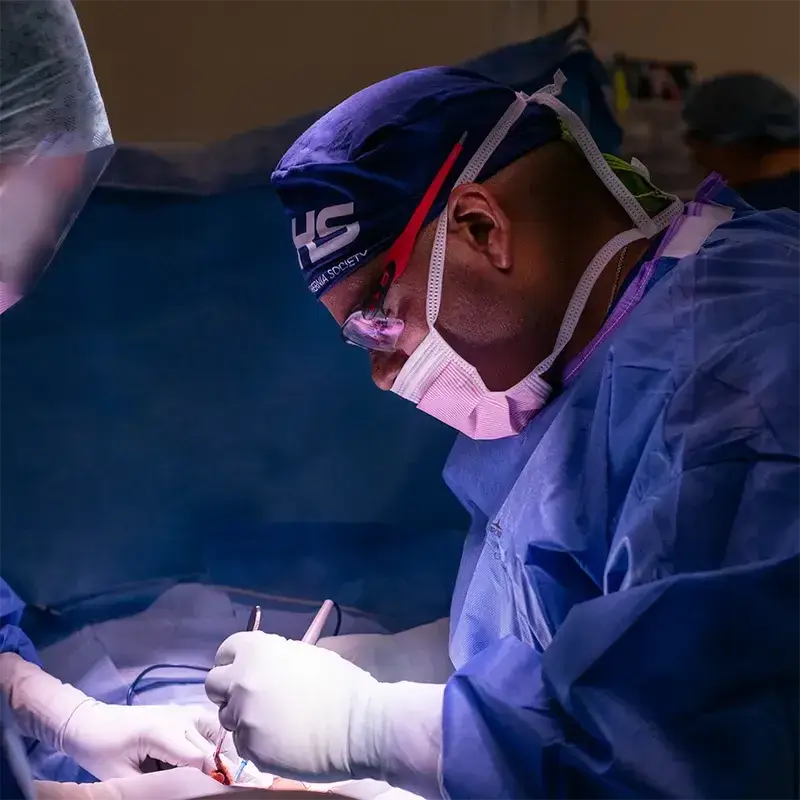
With broad experience in open and laparoscopic hernia repair, Dr Roshan Ariyaratnam offers individualised care to patients throughout Canterbury, using advanced surgical methods focused on patient wellbeing and results.
Following a referral, his approach typically includes:
- Initial consultation: A detailed examination to confirm the hernia and outline the pros and cons of different treatment approaches.
- Hernia repair surgery: Carried out with either open or laparoscopic approaches, depending on the hernia type.
- Recovery and follow-up: Assisting patients through recovery with clear instructions on returning to normal movement and physical exertion.
Dr Roshan Ariyaratnam is widely regarded by peers for his work in complex hernia repair and abdominal wall reconstruction, with many surgeons across Canterbury referring patients to his care.
Mesh and Your Hernia Repair
Most hernia repairs today use non-absorbable mesh to strengthen the abdominal wall and reduce the likelihood of the hernia recurring. While small hernias with minimal symptoms may sometimes be managed with ‘watchful waiting’ or non-mesh tissue repair, mesh reinforcement is considered the gold standard for most inguinal and ventral hernias.
Mesh is tightly regulated in Australia by the TGA and supported by the ANZ Hernia Society. Though complications are rare, they may occur with both mesh and non-mesh repairs; however, mesh repairs generally have lower recurrence rates. Dr Roshan Ariyaratnam will discuss the advantages, disadvantages, and your individual circumstances so you can make an informed decision.
Robotic Hernia Surgery
Robotic hernia surgery is the next evolution in minimally invasive hernia repair, combining the precision of advanced robotic technology with the expertise of a specialist hernia surgeon. Using the da Vinci Xi surgical platform, Dr Roshan Ariyaratnam performs robotic procedures that allow greater accuracy, smaller incisions, and faster recovery compared with traditional open or standard laparoscopic repair.
Robotic surgery is particularly advantageous for difficult hernias, including ventral, incisional, inguinal, and recurrent types, where detailed dissection and tension-free closure are vital. The technology’s 3D imaging, tremor stabilisation, and articulated instruments offer superior precision for tasks like mesh positioning or tissue separation.
Key potential advantages of robotic hernia surgery include:
- Less visible scarring and decreased pain during recovery
- Lower risk of wound complications and infection
- Speedier return to everyday tasks and professional duties
- Improved precision in abdominal wall reconstruction
- Improved safety and predictable outcomes for recurrent or complex hernias
Dr Ariyaratnam provides robotic hernia surgery at both Knox Private Hospital and Epworth Freemasons, combining multidisciplinary care with personalised planning based on each patient’s body, history, and lifestyle.
Looking to treat your hernia and get back to feeling comfortable again?
Your Hernia Surgery Canterbury Questions Answered
Do all hernias need surgery?
Once a hernia forms, it can’t heal on its own. This means that hernia surgery is recommended in an effort to prevent enlargement, complications, and the chance of developing a strangulated hernia. In many cases, mesh is used to reinforce the hernia repair and reduce the chances of it returning. Dr Roshan Ariyaratnam will discuss whether mesh or non-mesh repair may be most appropriate for your hernia.
own. This means that hernia surgery is recommended in an effort to prevent enlargement, complications, and the chance of developing a strangulated hernia. In many cases, mesh is used to reinforce the hernia repair and reduce the chances of it returning. Dr Roshan Ariyaratnam will discuss whether mesh or non-mesh repair may be most appropriate for your hernia.
What is the difference between open hernia repair and laparoscopic hernia repair?
Open hernia repair involves a small incision directly over the defect, while laparoscopic hernia repair uses tiny incisions and a camera inside the abdomen. Both aim to heal the hernia, but laparoscopic techniques often allow for a quicker recovery.
What is complex hernia surgery?
This refers to advanced reconstruction of the abdominal wall for very large or recurrent hernias. It often involves rebuilding connective tissue, restoring blood flow, and reinforcing the wall with mesh (such as an inguinal hernia mesh plug). Mesh, including absorbable and traditional options, is often a part of complex abdominal wall reconstruction.
How long is the recovery after hernia surgery?
Your recovery time varies depending on the type of hernia repair. Laparoscopic surgery is minimally invasive, allowing most patients to return home within a day. Gentle walking is encouraged soon after, though heavier activity should wait until your surgeon approves. Open hernia repair usually requires a longer recovery, often several weeks more. Dr Roshan Ariyaratnam will guide you on when it’s safe to resume normal routines.
What areas do you service?
Union Road Specialist Centre is easily accessible to patients in:
Why Dr Roshan Ariyaratnam?
Specialist in Complex Hernia Repair
Dr Roshan Ariyaratnam has extensive experience in open and laparoscopic techniques, abdominal wall reconstruction, and complex hernia repair.
Rapid Access
Most patients are seen within one week of referral, with streamlined GP and specialist communication.
Convenient Access
Consultations with Dr Roshan Ariyaratnam are available across multiple Victoria locations giving patients the convenience of choosing their preferred location.
Our Location near Canterbury
Book Your Hernia Consultation Today
If you’ve noticed a lump, pain, or symptoms that suggest a hernia, treatment options are available close to home. Dr Roshan Ariyaratnam is a specialist in complex hernia repair and aims to offer lasting relief from multiple locations in Victoria.
Don’t let hernia pain or discomfort affect your daily life; arrange a consultation today to discuss your treatment options.