
Hernia Surgery Macedon Ranges
Hernia repair, provided by a Macedon Ranges general surgeon with a focus on complex cases.
Understanding Hernias
Living with a hernia may be uncomfortable, frustrating, and sometimes worrying. What may begin as a small lump or mild discomfort in the groin or abdomen often becomes more noticeable over time, especially when lifting, coughing, or straining.
Although certain hernias may cause little more than mild discomfort, others can result in ongoing pain or serious complications when not addressed.
Known for his advanced understanding of complex hernia repair, Dr Roshan Ariyaratnam is regularly referred patients by other surgeons for detailed assessment and surgical care.

Causes of Hernias
A hernia happens when abdominal contents push through the abdominal wall, often creating a lump or bulge in the groin area, belly button, or at the site of a previous incision. For some, hernias occur because of a natural weakness in the abdominal muscles and may be present at birth. For others, they develop over time due to strain from lifting heavy objects, chronic coughing, or difficulty with bowel movements.
Symptoms of Hernias
The signs of a hernia are not always the same for everyone. Typically, a hernia presents as a lump that may cause discomfort or worsen with physical activity. Other possible indications are:
- A heavy or uncomfortable dragging sensation
- A sense of heaviness or internal pressure
- Discomfort
- Swelling
- Discomfort or aching around the bulge
- Pain that worsens during physical exertion or lifting
- A feeling of heat or irritation in the affected area
Since hernias usually worsen with time and carry risks if left unaddressed, most surgeons recommend surgical repair.

Types of Hernia
There are three main types of abdominal wall hernia:

Umbilical Hernia
What it is: This type of hernia develops when tissue pushes through the abdominal wall around the belly button (umbilicus).
Common symptoms: Swelling or pain near the umbilicus, often becoming more obvious when standing, coughing, or lifting.
Treatment options: An umbilical hernia may seem minor at first, but without treatment, it can lead to serious complications such as strangulation. Surgery is the definitive treatment.

Groin Hernia
What it is: This type of hernia happens when abdominal tissue bulges through a weak spot in the lower abdomen, often extending into the groin or upper thigh. The inguinal hernia is most common, while femoral hernias tend to occur more often in women.
Common symptoms: Pain, pressure, and a bulge in the groin area that becomes more visible when coughing or straining. However, not all groin hernias cause a lump, and in women, they may present only with pain or discomfort.
Treatment options: You may be able to monitor a painless groin hernia initially, but most become bothersome over time. When symptoms like pressure, constipation, or urinary issues develop, surgery is generally recommended.

Ventral Hernia
What it is: This type of hernia occurs when tissue pushes through weakened abdominal muscles, often near a surgical scar (incisional), above the belly button (epigastric), or between muscle layers (spigelian).
Common symptoms: Swelling, pressure, or pain in the abdominal region, often more obvious during movement or when straining.
Treatment options: Observation may be suitable for small, painless ventral hernias, but surgery is advised if the hernia increases in size or begins to cause discomfort.
Hernia Surgery With Dr Roshan Ariyaratnam
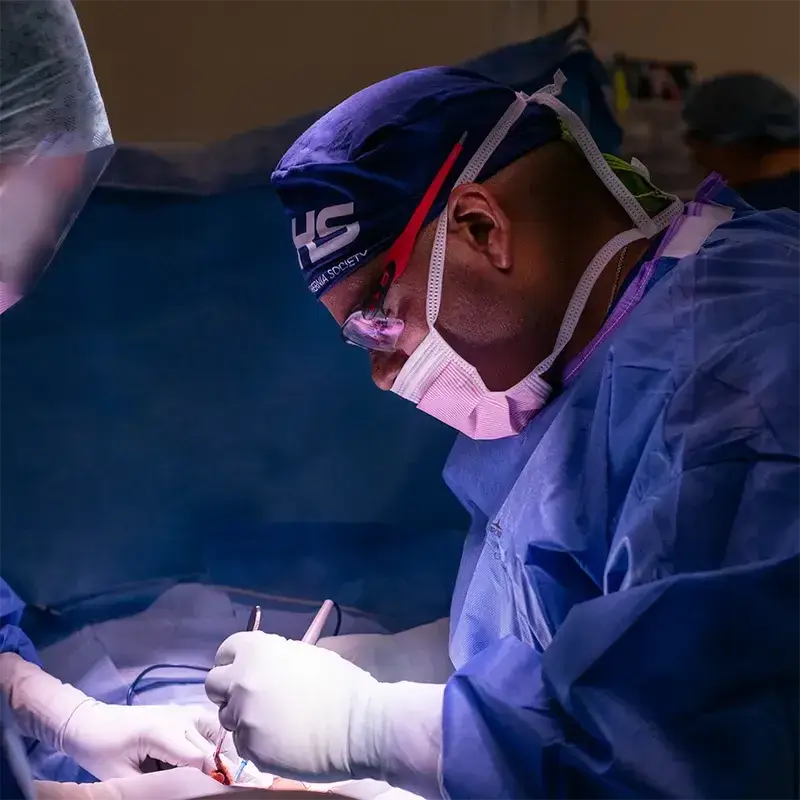
Providing care to patients across Macedon Ranges, Dr Roshan Ariyaratnam applies his wide experience in open and laparoscopic hernia repair and his commitment to patient-centred treatment for optimal outcomes.
After your referral has been submitted, the next steps in his process are:
- Initial consultation: A detailed examination to confirm the hernia and outline the pros and cons of different treatment approaches.
- Hernia repair surgery: Carried out with either open or laparoscopic approaches, depending on the hernia type.
- Recovery and follow-up: Supporting patients with guidance on when to resume strenuous activity or strenuous exercise after surgery.
Dr Roshan Ariyaratnam is also recognised by other surgeons for his interest in complex hernia repair and abdominal wall reconstruction, making him a trusted choice for referrals across the Macedon Ranges hernia community.
Mesh and Your Hernia Repair
Non-absorbable mesh is now widely used in hernia surgery to strengthen weak areas of the abdominal wall and minimise recurrence. While observation or non-mesh repairs may be suitable for very small hernias, mesh reinforcement is generally recommended for inguinal and ventral hernias.
Mesh is tightly regulated in Australia by the TGA and supported by the ANZ Hernia Society. Though complications are rare, they may occur with both mesh and non-mesh repairs; however, mesh repairs generally have lower recurrence rates. Dr Roshan Ariyaratnam will discuss the advantages, disadvantages, and your individual circumstances so you can make an informed decision.
Robotic Hernia Surgery
Robotic hernia repair combines advanced robotic systems with refined surgical skill, offering a new standard in minimally invasive surgery. With the da Vinci Xi platform, Dr Roshan Ariyaratnam performs precise operations that minimise incisions and support faster recovery compared to open or conventional laparoscopic repairs.
Robotic surgery is particularly advantageous for difficult hernias, including ventral, incisional, inguinal, and recurrent types, where detailed dissection and tension-free closure are vital. The technology’s 3D imaging, tremor stabilisation, and articulated instruments offer superior precision for tasks like mesh positioning or tissue separation.
The main potential benefits of robotic hernia surgery include:
- Minimal scarring and less discomfort after surgery
- Reduced likelihood of infection or wound-related issues
- Shorter downtime before resuming normal activities and work
- Enhanced control and precision for complex abdominal wall procedures
- Consistent and reliable results in challenging or repeat hernia cases
Dr Ariyaratnam provides robotic hernia surgery at both Knox Private Hospital and Epworth Freemasons, combining multidisciplinary care with personalised planning based on each patient’s body, history, and lifestyle.
Are you ready to take the next step toward relieving your hernia-related discomfort?
Your Hernia Surgery Macedon Ranges Questions Answered
Do all hernias need surgery?
A hernia won’t close or heal by itself, so surgical repair is typically recommended to avoid complications and recurrence. Many procedures include mesh reinforcement for added strength, and Dr Roshan Ariyaratnam will advise whether a mesh or non-mesh approach is most suitable for you.
own. This means that hernia surgery is recommended in an effort to prevent enlargement, complications, and the chance of developing a strangulated hernia. In many cases, mesh is used to reinforce the hernia repair and reduce the chances of it returning. Dr Roshan Ariyaratnam will discuss whether mesh or non-mesh repair may be most appropriate for your hernia.
What is the difference between open hernia repair and laparoscopic hernia repair?
In open hernia repair, the surgeon makes a small cut over the hernia site, whereas laparoscopic repair is performed through several small incisions with the help of a camera. Both methods repair the hernia, though laparoscopic surgery typically offers a faster recovery time.
What is complex hernia surgery?
Abdominal wall reconstruction is a complex surgical approach used for major or recurrent hernias. It may include restoring tissue layers, improving blood supply, and securing the repair with mesh, whether absorbable or permanent, for added durability.
How long is the recovery after hernia surgery?
The recovery process varies depending on whether your hernia repair was open or laparoscopic. Minimally invasive (laparoscopic) procedures usually allow same-day discharge and early light movement, while open repairs often need several more weeks of recovery. Dr Roshan Ariyaratnam will recommend when it may be safe to resume work and exercise.
What areas do you service?
Vineyard Specialist Centre is easily accessible to patients in:
Why Dr Roshan Ariyaratnam?
Specialist in Complex Hernia Repair
Dr Roshan Ariyaratnam brings a wealth of experience in open and keyhole hernia repair, including complex cases and advanced abdominal wall reconstruction.
Rapid Access
Patients are typically scheduled within a week of referral, ensuring clear and efficient communication between GPs and specialists.
Convenient Access
Dr Roshan Ariyaratnam consults across multiple locations in Victoria, allowing you to choose the location most convenient for you.
Our Location near Macedon Ranges
Book Your Hernia Consultation Today
If you’ve noticed a lump, pain, or symptoms that suggest a hernia, treatment options are available close to home. Dr Roshan Ariyaratnam is a specialist in complex hernia repair and aims to offer lasting relief from multiple locations in Victoria.
Don’t let hernia pain or discomfort affect your daily life; arrange a consultation today to discuss your treatment options.