
Hernia Surgery Ringwood
Understanding Hernias
A hernia can cause both physical discomfort and emotional frustration. It often starts as a minor swelling or slight pain in the groin or stomach area and tends to become more pronounced with exertion, coughing, or lifting.
Although certain hernias may cause little more than mild discomfort, others can result in ongoing pain or serious complications when not addressed.
As a specialist general surgeon with interests and advanced knowledge in complex hernia repair, Dr Roshan Ariyaratnam is a natural choice for complex hernia cases, revision work, and referrals from other surgeons.

Causes of Hernias
A hernia forms when internal tissue pushes through weakened abdominal muscles, creating a visible bulge around the groin, navel, or surgical scar. Some hernias are present from birth due to muscle weakness, while others develop later from ongoing strain, heavy lifting, or chronic coughing.
Symptoms of Hernias
The symptoms of hernias may vary. Most hernias cause a lump that may be tender or lead to increased pain with activity or straining. Other signs include:
- A persistent pulling or dragging feeling
- A feeling of pressure or fullness
- Mild to moderate pain or discomfort
- A noticeable bulge or puffiness
- Pain where the lump is located
- Pain that worsens during physical exertion or lifting
- A warm or burning sensation around the hernia site
Because hernias tend to enlarge over time and can cause serious complications, surgeons typically recommend hernia repair surgery.

Types of Hernia
There are three main types of abdominal wall hernia:

Umbilical Hernia
What it is: Occurring near the belly button, an umbilical hernia happens when tissue or intestine breaks through the abdominal wall.
Common symptoms: Swelling or pain near the umbilicus, often becoming more obvious when standing, coughing, or lifting.
Treatment options: An umbilical hernia may seem minor at first, but without treatment, it can lead to serious complications such as strangulation. Surgery is the definitive treatment.

Groin Hernia
What it is: Occurring when tissue breaks through the lower abdominal wall, a groin hernia can extend into the groin or upper thigh. Inguinal hernias are most common, though women are more prone to developing femoral hernias.
Common symptoms: Discomfort, heaviness, or swelling in the groin area, which can increase with activity or strain. Some hernias, particularly in women, may cause pain even without a lump.
Treatment options: If your groin hernia is not uncomfortable, you may be able to watch and wait to see how it progresses. Typically, a groin hernia becomes symptomatic after one to two years. At this point, doctors typically recommend hernia surgery as it may assist with reducing symptoms like constipation and urinary difficulties.

Ventral Hernia
What it is: A ventral hernia forms through a weak point in the abdominal wall, typically appearing as an incisional, epigastric, or spigelian hernia depending on its location.
Common symptoms: A bulge or tightness in the abdomen that increases with activity, coughing, or standing for long periods.
Treatment options: For ventral hernias that aren’t uncomfortable, watching and waiting is typically considered safe. However, if the hernia becomes larger or causes pain, hernia surgery is recommended.
Hernia Surgery With Dr Roshan Ariyaratnam
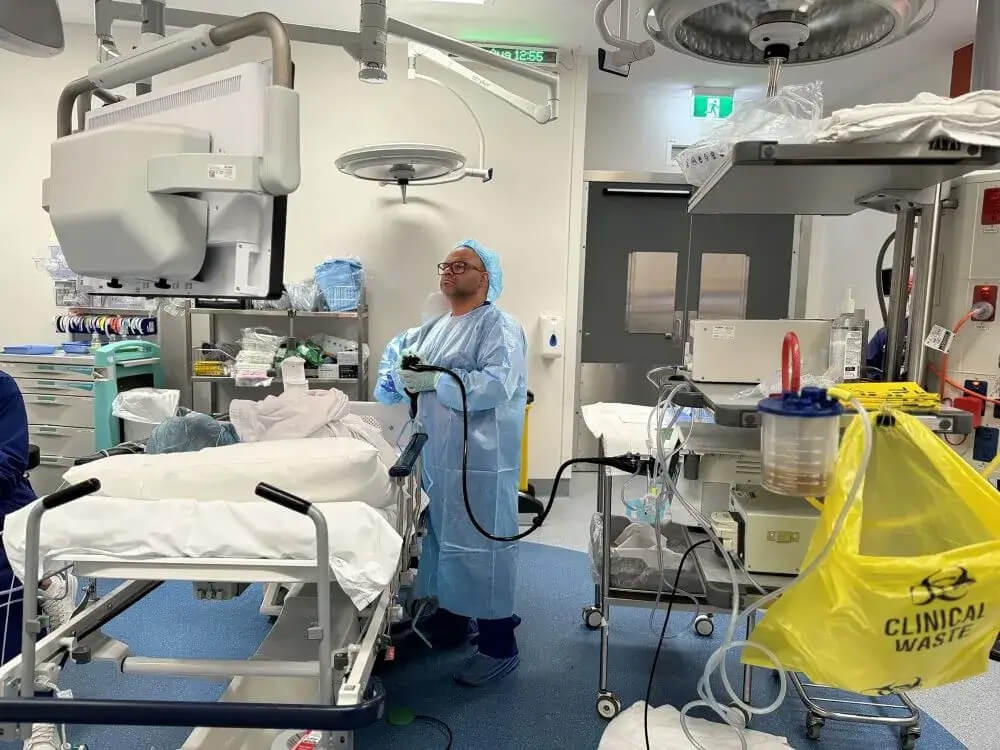
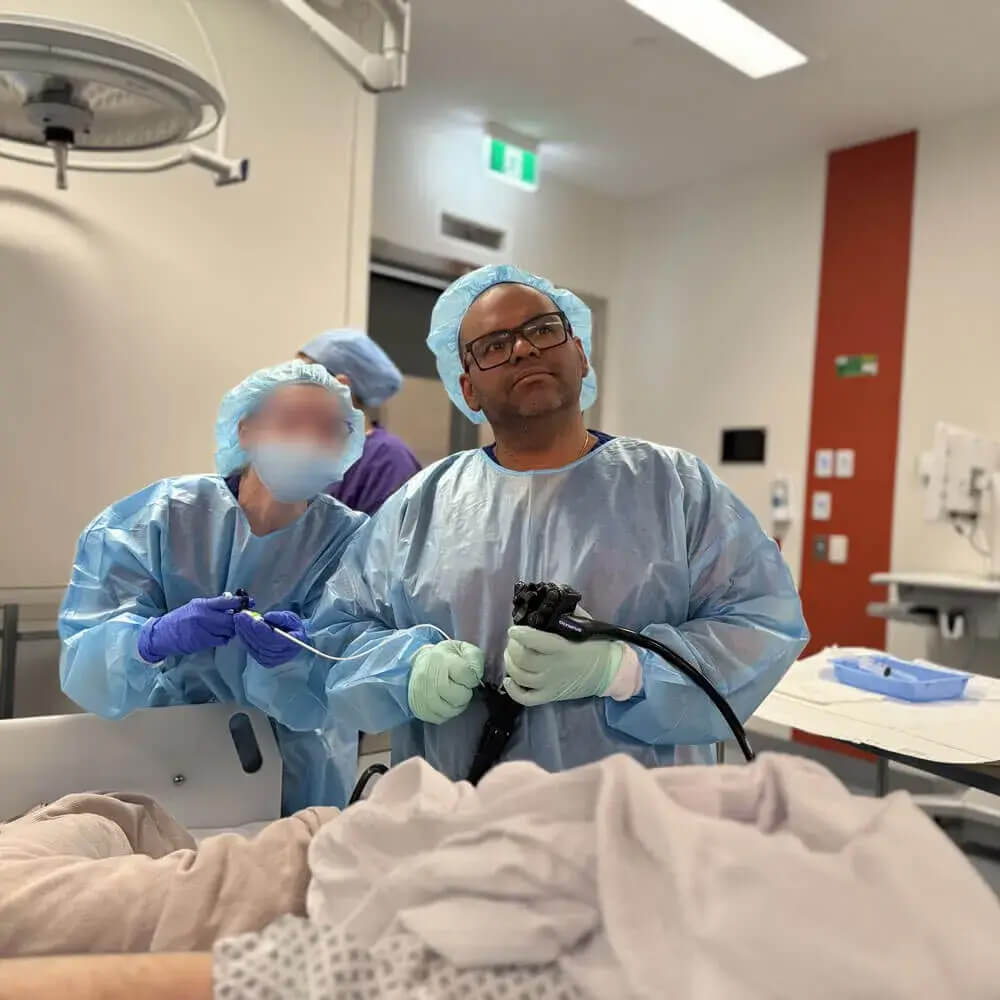
With broad experience in open and laparoscopic hernia repair, Dr Roshan Ariyaratnam offers individualised care to patients throughout Ringwood, using advanced surgical methods focused on patient wellbeing and results.
Following a referral, his approach typically includes:
- Initial consultation: Assessing your condition, confirming the hernia type, and discussing potential risks and treatment options.
- Hernia repair surgery: Using keyhole or open techniques.
- Recovery and follow-up: Offering tailored guidance on when and how to safely resume exercise or heavy activity post-surgery.
Dr Roshan Ariyaratnam is widely regarded by peers for his work in complex hernia repair and abdominal wall reconstruction, with many surgeons across Ringwood referring patients to his care.
Mesh and Your Hernia Repair
Most hernia repairs today use non-absorbable mesh to strengthen the abdominal wall and reduce the likelihood of the hernia recurring. While small hernias with minimal symptoms may sometimes be managed with ‘watchful waiting’ or non-mesh tissue repair, mesh reinforcement is considered the gold standard for most inguinal and ventral hernias.
Under TGA regulation and with support from the ANZ Hernia Society, mesh use in Australia is carefully managed. While both mesh and non-mesh repairs can occasionally lead to complications, mesh repairs tend to have fewer recurrences. Dr Roshan Ariyaratnam will explain the risks, benefits, and factors specific to your case to help you make an informed choice.
Robotic Hernia Surgery
Robotic hernia surgery represents the latest advancement in minimally invasive techniques, merging robotic precision with the skill of an experienced hernia surgeon. Through the da Vinci Xi system, Dr Roshan Ariyaratnam offers procedures with enhanced control, smaller cuts, and quicker recovery than traditional laparoscopic surgery. The next generation of hernia repair, robotic surgery, blends state-of-the-art robotic precision with the hands-on care of a hernia surgeon. Using the da Vinci Xi robotic platform, Dr Roshan Ariyaratnam achieves high accuracy, minimal scarring, and a faster return to normal activity.
This technique offers significant benefits for complex or recurrent hernias, including ventral, incisional, and inguinal cases. Enhanced 3D imaging, tremor control, and wrist-like instrument motion provide exceptional precision during intricate steps such as component separation and mesh placement.
Key potential advantages of robotic hernia surgery include:
- Minimal scarring and less discomfort after surgery
- Reduced likelihood of infection or wound-related issues
- Speedier return to everyday tasks and professional duties
- More refined technique in reconstructing and reinforcing the abdominal wall
- Safe and reproducible outcomes for complex or recurrent hernias
At Knox Private Hospital and Epworth Freemasons, Dr Ariyaratnam performs robotic hernia repairs using a collaborative approach that considers individual anatomy, prior operations, and lifestyle factors.
Are you ready to take the next step toward relieving your hernia-related discomfort?
Your Hernia Surgery Ringwood Questions Answered
Do all hernias need surgery?
A hernia won’t close or heal by itself, so surgical repair is typically recommended to avoid complications and recurrence. Many procedures include mesh reinforcement for added strength, and Dr Roshan Ariyaratnam will advise whether a mesh or non-mesh approach is most suitable for you.
own. This means that hernia surgery is recommended in an effort to prevent enlargement, complications, and the chance of developing a strangulated hernia. In many cases, mesh is used to reinforce the hernia repair and reduce the chances of it returning. Dr Roshan Ariyaratnam will discuss whether mesh or non-mesh repair may be most appropriate for your hernia.
What is the difference between open hernia repair and laparoscopic hernia repair?
In open hernia repair, the surgeon makes a small cut over the hernia site, whereas laparoscopic repair is performed through several small incisions with the help of a camera. Both methods repair the hernia, though laparoscopic surgery typically offers a faster recovery time.
What is complex hernia surgery?
Abdominal wall reconstruction is a complex surgical approach used for major or recurrent hernias. It may include restoring tissue layers, improving blood supply, and securing the repair with mesh, whether absorbable or permanent, for added durability.
How long is the recovery after hernia surgery?
This depends on the type of surgery you had. As laparoscopic hernia repair is a minimally invasive surgery, most patients go home the same day or the next day. After this, light walking is typically encouraged, but more strenuous activity should be avoided until cleared by your surgeon. Recovery from open hernia repair generally takes several weeks longer than laparoscopic techniques. Regardless of the type of surgery you had, Dr Roshan Ariyaratnam will advise you on when you can return to your usual activities.
What areas do you service?
Knox Private Hospital and Forest Hill Medical and Dental Centre are easily accessible to patients in:
Why Dr Roshan Ariyaratnam?
Specialist in Complex Hernia Repair
Experienced in a wide range of surgical approaches, Dr Roshan Ariyaratnam performs open and laparoscopic repairs as well as intricate abdominal wall reconstructions.
Rapid Access
Most patients are seen within one week of referral, with streamlined GP and specialist communication.
Convenient Access
Dr Roshan Ariyaratnam provides consultations at several Victoria locations, making it easier to find a clinic close to home.
Book Your Hernia Consultation Today
Noticing a lump or discomfort that could be a hernia? Dr Roshan Ariyaratnam offers comprehensive hernia care from multiple Victoria locations, focusing on long-term results.
Take the first step toward relief. Schedule your appointment today to explore the best potential treatment options for your hernia.